Recent Work
A collection of AI evaluation, Meta, and Mixpanel projects.
AI Evaluator • See Prototype
AI development/LLMops tools like LangSmith and Braintrust have experienced concentrated hyper growth at the expense of thoughtful UX.
In addition to a myriad of unexpected interactions, layouts, and circular workflows, the fundamental issue I want to highlight is product hierarchy and information architecture.
There is an opportunity to learn from what has enabled these tools to succeed, and where they could continue to improve. In both tools, teams are forced to build their evaluators, metrics, and frameworks in siloes, resulting an enormous amount of rework and eventual disconnect.
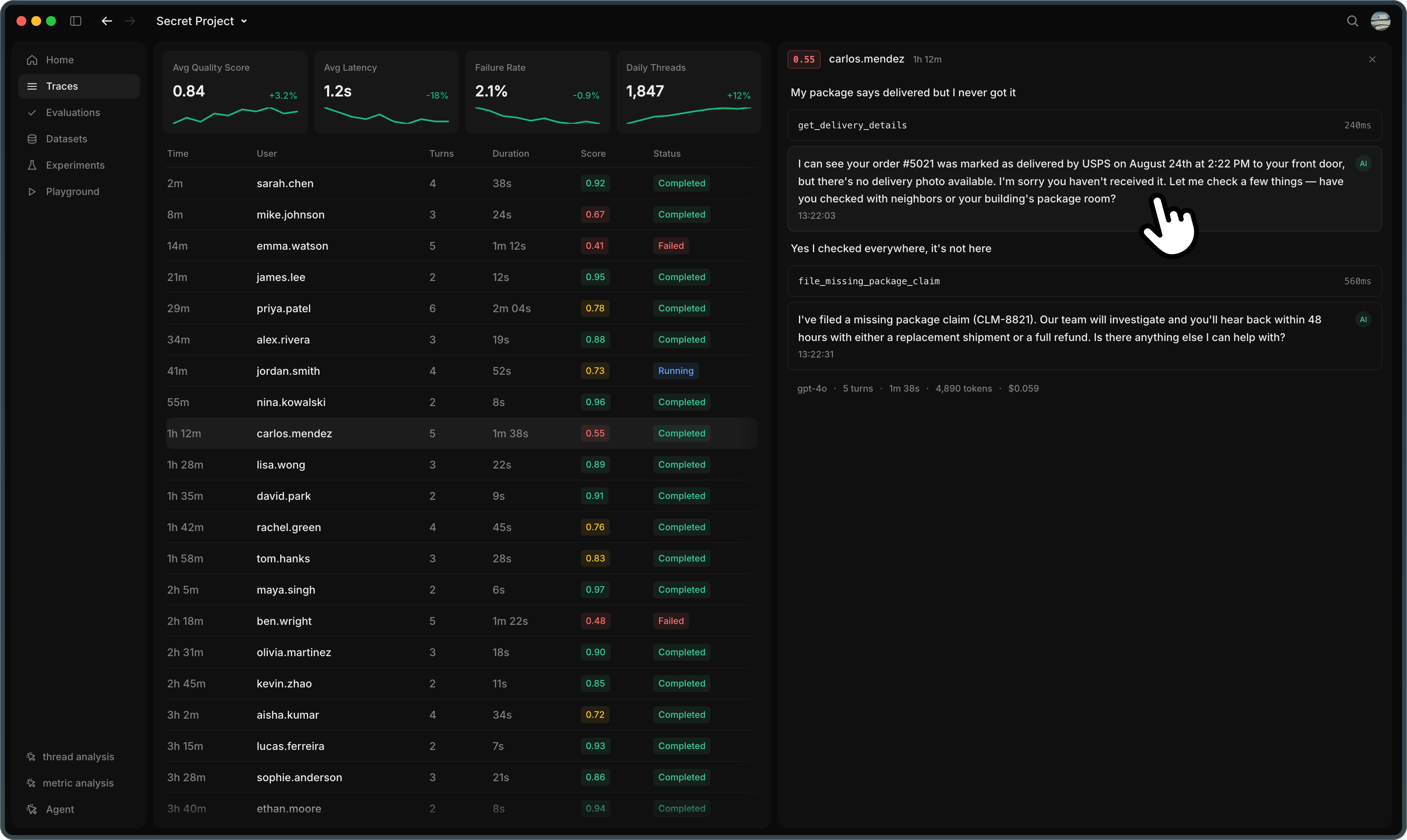
Above you'll see my high level take on a LangSmith redesign. Workspace and Project selections are now top-level navigation elements.
The layout offers both clarity and focus. Workspace and project selections are top nav elements while the left navigation acts as the anchor for the three-panel drill down encouraging interactivity to dive deep in the weeds without getting lost.
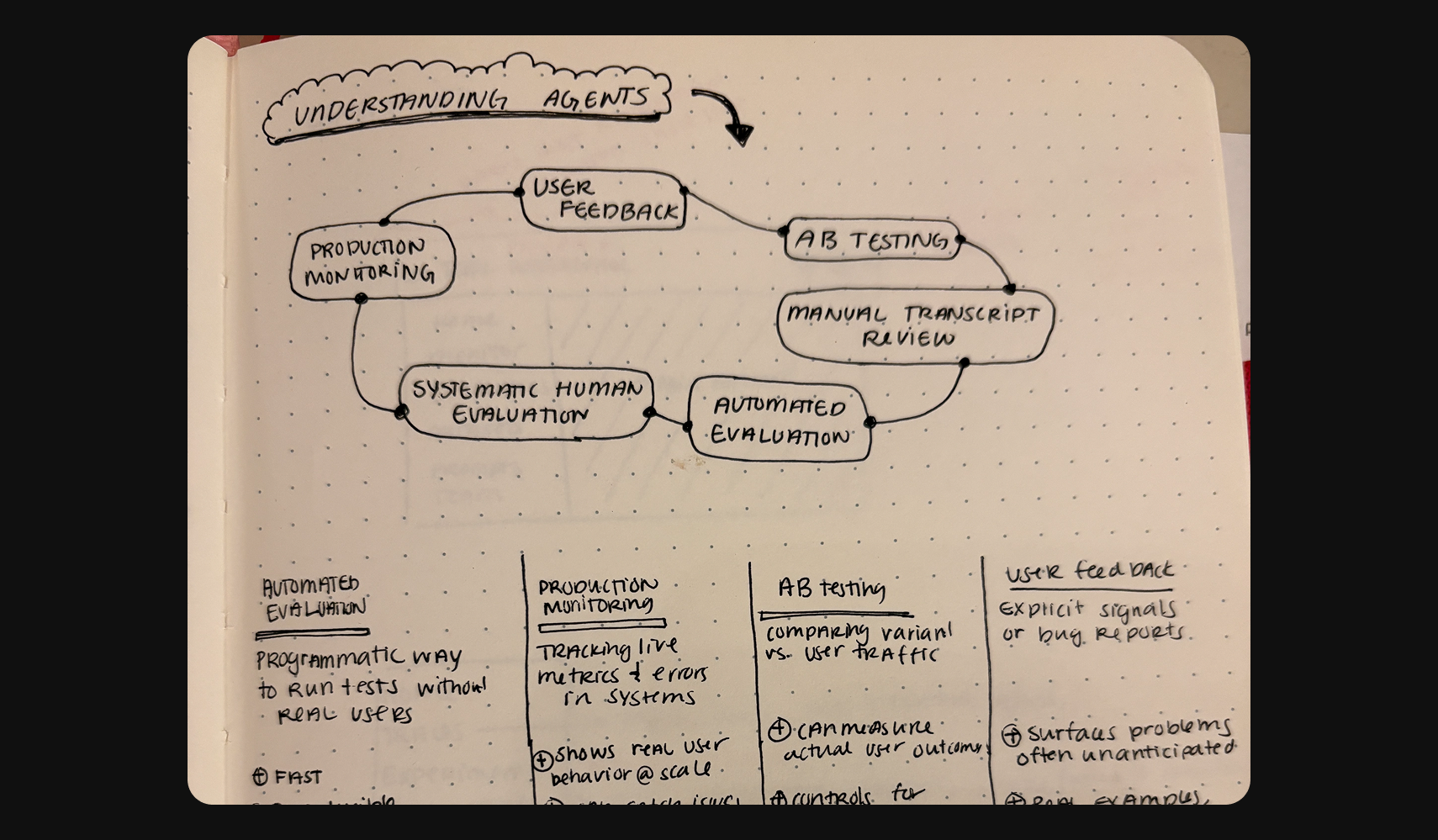
The core purpose of these tools is to help teams understand their agents. These tools should be able to tell teams when and why their agent goes awry, and offer a way to proactively prevent drift as improvements ship, new models get incorporated, and user behavior changes.
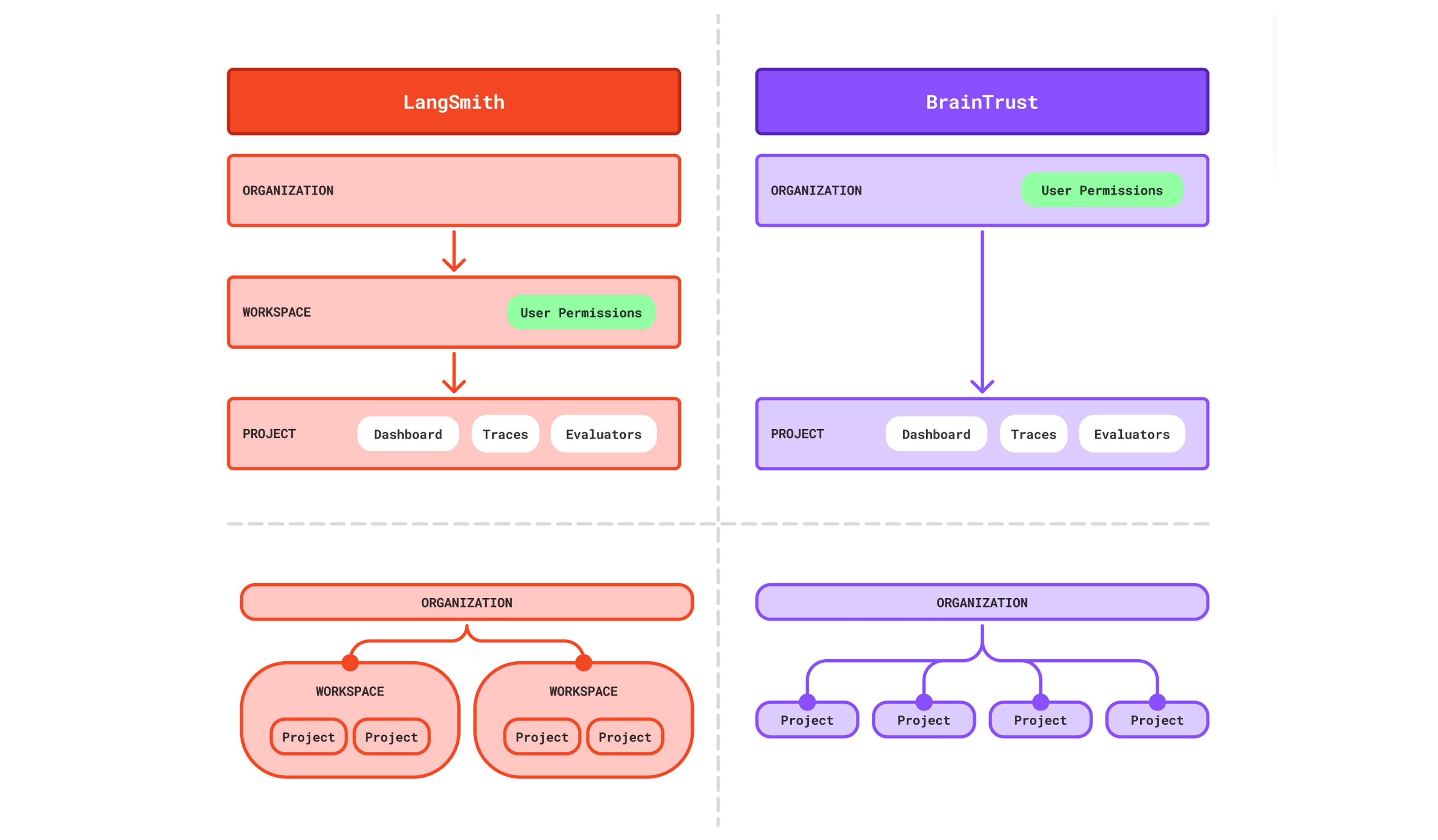
After analyzing the high level architecture of Braintrust and LangSmith, it seems that both focus on single/siloed-team enablement. Neither tools allow for core elements like Evaluators, Company metrics, or Prompt structures to be reused or templatetized so more novice teams can quickly adopt best practices and glean value from the tool.
Connected TV • See Prototype
Meta generates revenue by selling ads across its ecosystem of apps — Facebook, Instagram, and WhatsApp. But relying solely on owned social inventory caps its growth ceiling.
Entering the $30B Connected TV market opens an entirely new supply category: high-margin, untapped, and additive to what Meta can offer its customers.
The project had two core challenges. First, finding where a net-new ad vertical belongs inside a system largely unchanged since 2007. Second, reconciling industry constraints and expectations across a wide range of internal stakeholders and disparate teams.
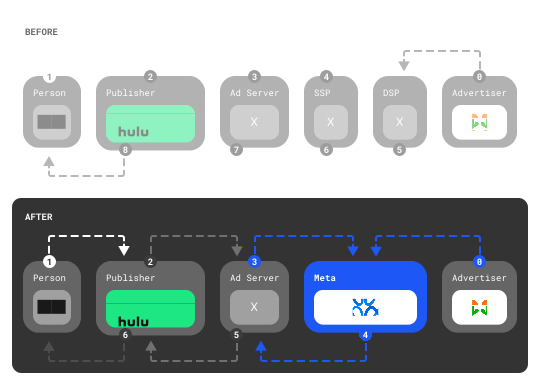
 Instacart runs a Super Bowl ad on TV.
  Meta allows Instacart to retarget viewers of their Super Bowl TV ad with a mobile optimized version of the ad.
The CTV ecosystem requires advertisers to pass through three intermediary layers before an ad ever reaches a viewer. In the diagram, Meta collapses the chain serving as a unified layer between the Ad Server and Advertiser.
As a designer, that meant more than building an advertiser-facing UI — it meant designing for publishers, ad servers, and industry protocols without making the experience feel foreign to existing Meta advertisers.
Meta's Ads Manager is a deeply layered tool — dozens of interdependent controls, each with upstream and downstream consequences.
By building a high-fidelity prototype that mapped every interaction, I was able to untangle the complexity before it could become a development problem. We were also able to use the prototype to run user research sessions directly against it, freeing engineering to focus on backend work.
Campaign Planner • See Prototype
Media planning is a critical step for brand advertisers as they manage substantial budgets with high impact ROI goals. Meta invested in tools to help advertisers plan their large brand budgets in 2016, but haven’t updated them since.
By revisiting its campaign planning tools, Meta can be a serious competitor in the $150B+ brand advertising market, better serving customers and capturing more brand budget.
Working with a lean team on a tight timeline, I led the campaign planner redesign by prototyping multiple iterations of the experience, evaluating them internally and externally, then partnering closely with engineering and product to bring it to production.
By recreating the design system in cursor, I enabled the team to quickly spin up realistic dynamic prototypes to evaluate divergent redesign ideas, that looked and felt realistic.
Query Builder
Mixpanel allows teams to ask and answer questions about this data without writing any code/SQL.
Designing a consumer-grade data querying system that can be used by data scientists at Uber-size companies with hundreds of ever-changing data warehouse tables and new team members at startups that just got off the ground, is a substantially complex challenge.
By focusing on analytics first principles, we were able to unify the entire query language, restructure the core report offerings, and design a system that could unfold and meet users where they were in their analytics journey.
A unified query structure across all report types, revealing complexity progressively as users work through inputs specific to each report.
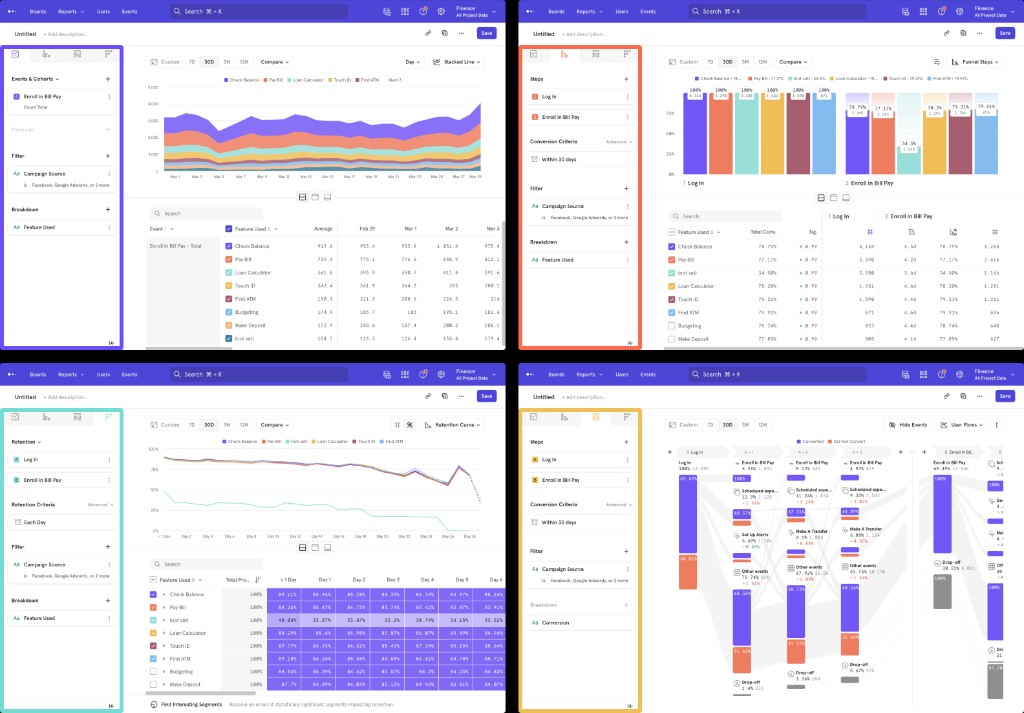
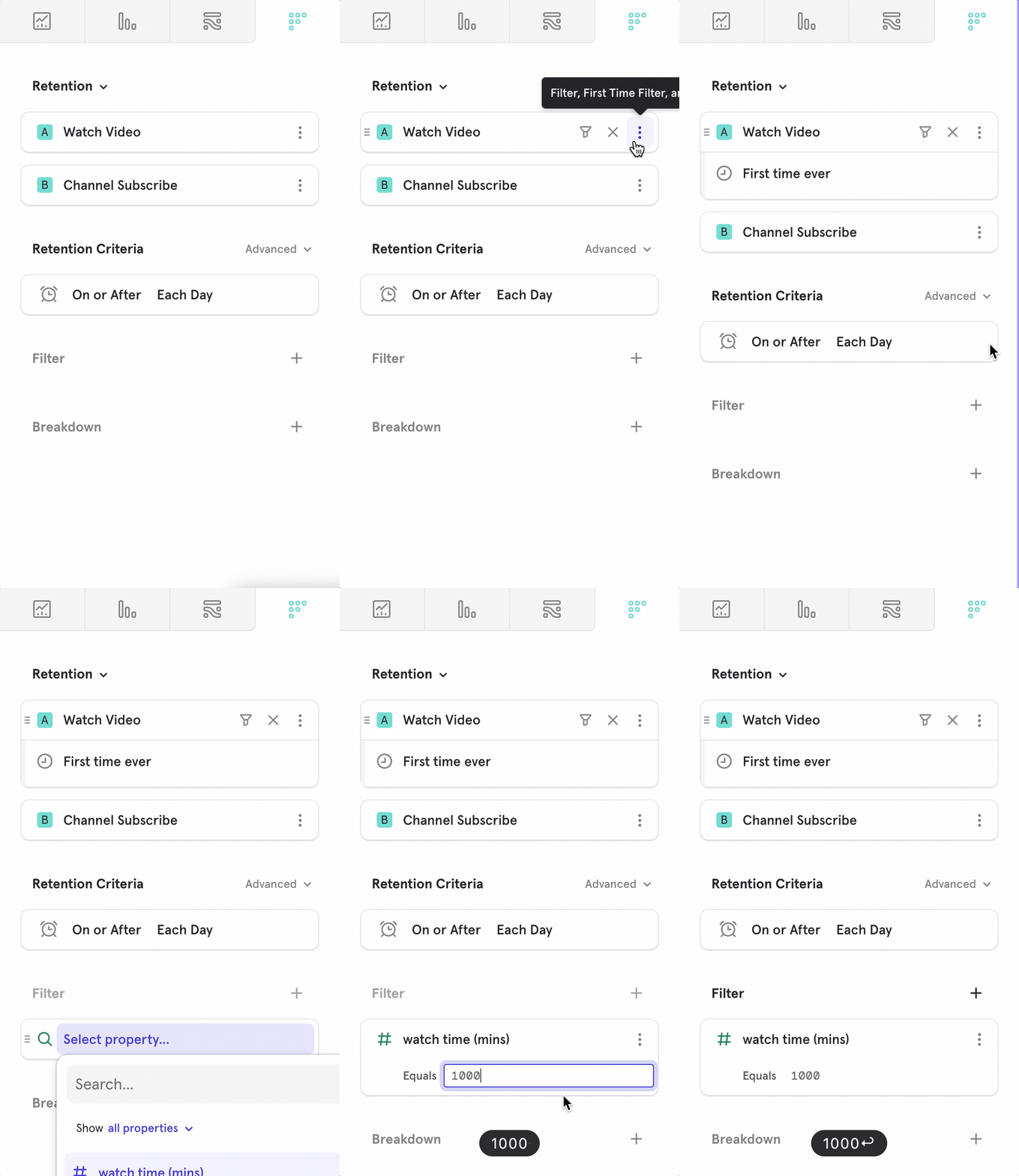
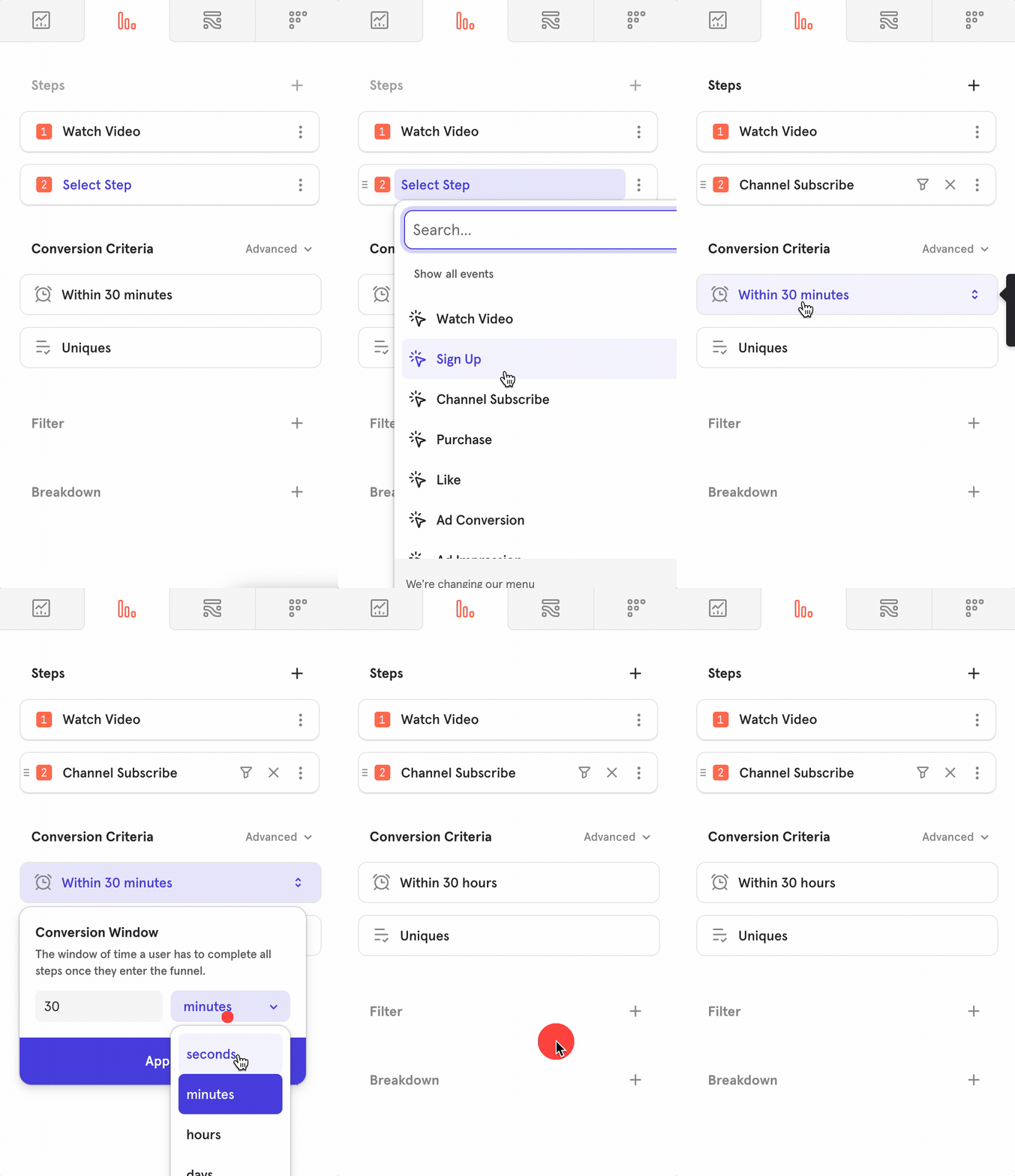
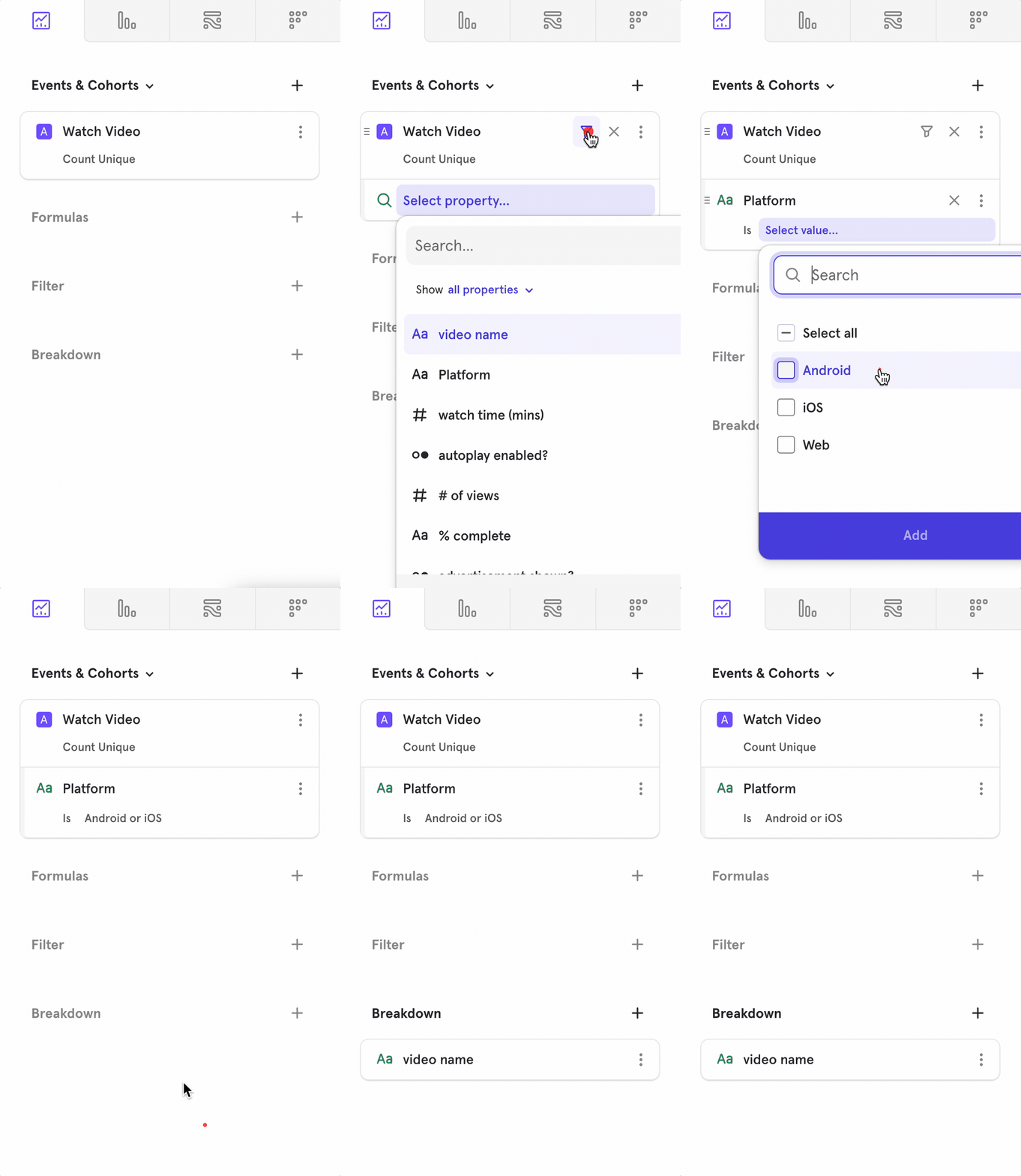
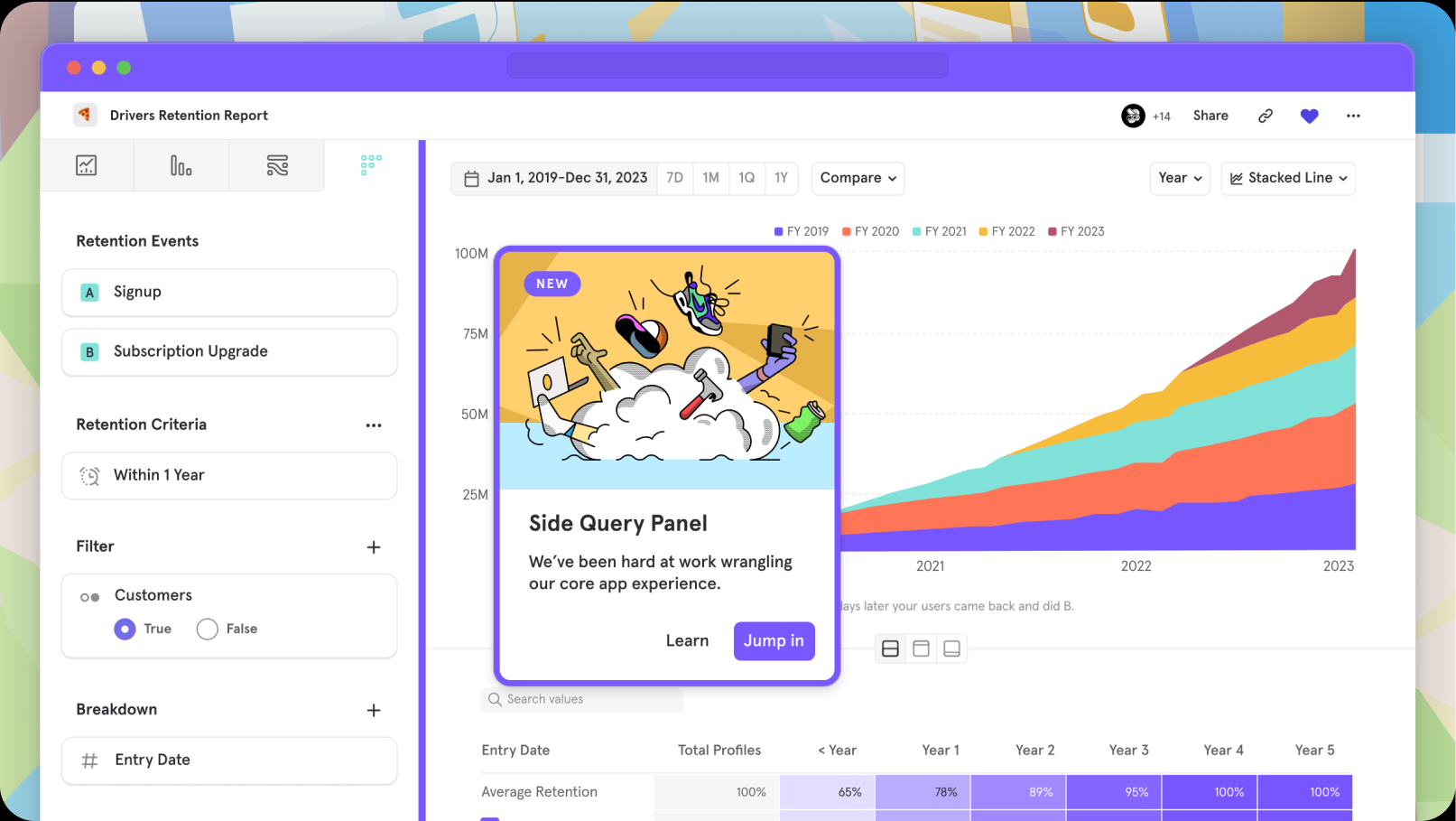
Mixpanel’s side query builder.
Dashboard • See Post
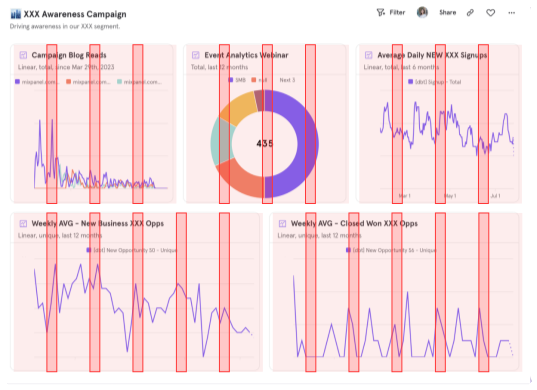
Mixpanel was founded prior to the emergence of multiplayer collaboration; the product was structured to help individuals ask and answer their data questions in isolation.
Mixpanel wasn’t evolving to meet the needs and structure of the teams it was serving, and as a result, Mixpanel encountered an inevitable churn problem.
By re-architecting the product to align with the structure and needs of its current customers, we were not only able to address churn head on, but we also paved the way for a suite of new collaboration-focused features.
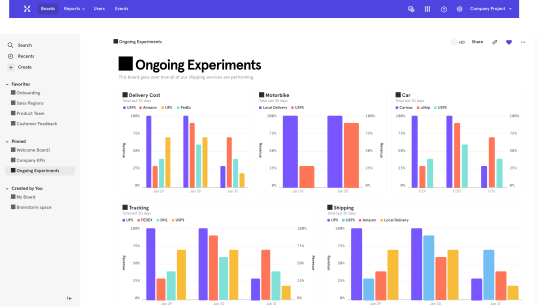
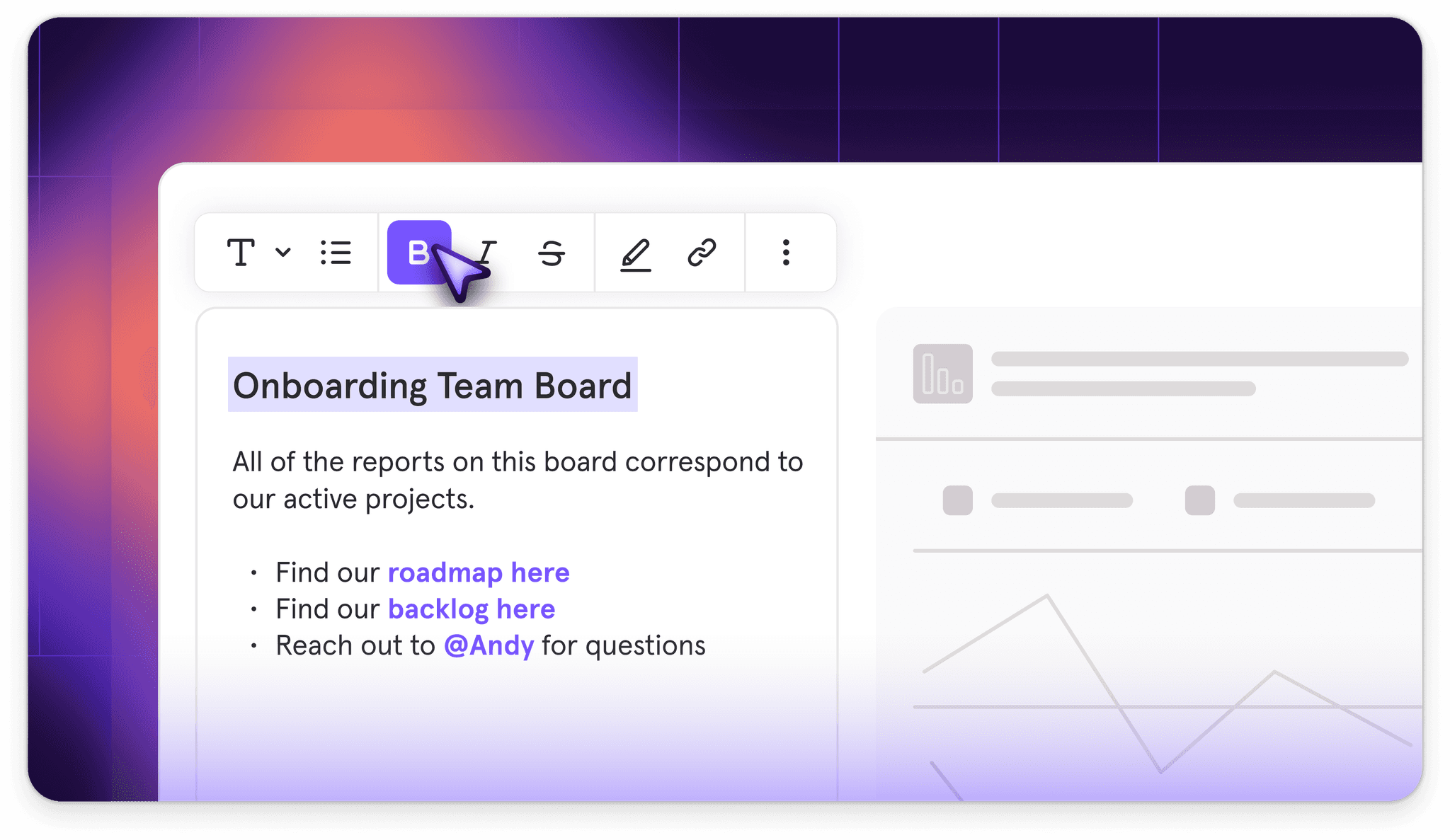
After establishing a boards-first workflow, we welcomed a wave of story-telling features including a responsive grid, text and media support, improved sharing and collaboration.